Los Angeles storm warnings put burn-scar neighborhoods on alert
Check Los Angeles storm warning zones, the November 19 flood-watch window and official preparedness resources.
Los Angeles County residents in selected burn-scar neighborhoods face evacuation warnings as a storm brings rain and possible thunderstorms to Southern California on Thursday, November 19. The immediate task for affected households is to check their address against the county’s current warning map and prepare to leave if officials escalate the notice.
The county’s dated storm notice set warnings to begin at 6 p.m. Wednesday because of potential mud and debris flows. Separately, the National Weather Service forecast for downtown Los Angeles lists a Flood Watch from 6 a.m. to 6 p.m. Pacific on Thursday. Those notices serve different purposes and cover areas defined by the agencies issuing them.
The county warning identifies places where residents should be ready to evacuate. The weather watch describes conditions that could produce flooding. Checking both gives a household a more useful picture than relying on a broad regional storm headline.
Start with your address and the latest county notice
The county’s November 18 incident block lists warning zones including ALD-EASTLOMA, ALD-EATONCANYON and ALD-RUBIO, along with other designated areas. Those names are reference points for the dated notice. They should be checked against the live map before a resident decides whether a home, school or relative’s address is affected.
- Open the county emergency page and locate the latest dated storm update. Follow its official evacuation-map link.
- Look up the specific address and read its current zone status. A nearby neighborhood’s status may differ.
- Check when the notice was issued or updated. A saved screenshot can be overtaken by a later order or a lifted warning.
- Sign up for county alerts through the links on Ready LA County and make sure other household members know how to receive updates.
Repeat the check for anyone who needs help leaving. Planning a pickup and a destination early is more practical than waiting until roads are busy or an order arrives. Use official instructions for the affected zone when choosing a route.
A warning, an order and a watch mean different things
Los Angeles County describes an evacuation warning as a potential threat to life or property. People who need extra time, including those with access or functional needs and households moving pets or livestock, should consider leaving while a warning is in place.
An evacuation order means an immediate threat and a direction to leave now. Residents should follow local officials’ instructions rather than wait for floodwater or debris to appear outside a home.
The NWS Flood Watch is a separate weather product. The downtown Los Angeles window spans 12 hours, from 6 a.m. to 6 p.m. Pacific. For readers coordinating from elsewhere, that is 9 a.m. to 9 p.m. Eastern. The window concerns the cited forecast location and should be checked against the weather alert for any other address.
A watch’s expiration also does not, by itself, lift an evacuation notice. The weather service and local emergency authorities issue their own updates. Each needs to be checked on its own terms.
Why burn scars matter when rain arrives
The U.S. Geological Survey’s post-fire guidance explains that fire can remove vegetation and change how hillsides respond to rainfall. Runoff can mobilize loose sediment and create dangerous debris flows. These flows can carry rocks, soil and other material through channels and into areas below a burned slope.
That risk helps explain why an evacuation warning can precede visible flooding. A household’s decision should follow the local warning and terrain-specific guidance, rather than a comparison with rainfall seen at a different point in the county.
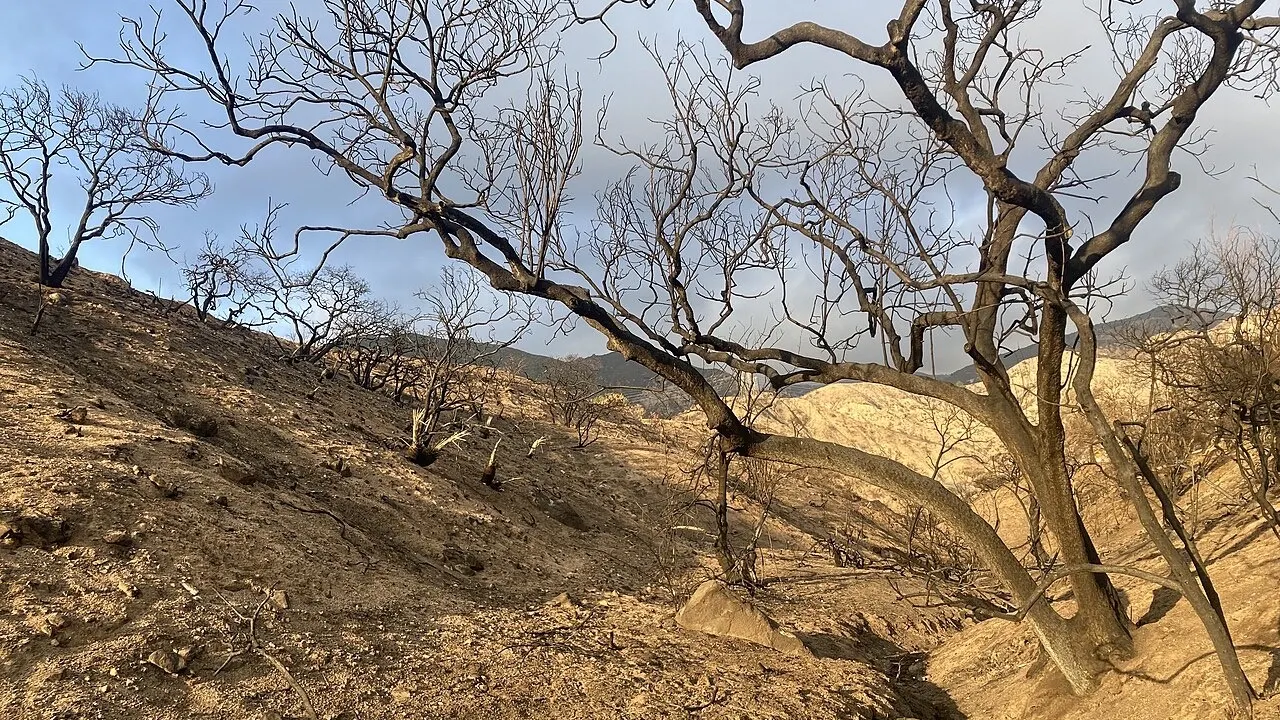
The photograph accompanying this article shows the Eaton Fire burn scar in Altadena in February 2025. It is an archival view of burned terrain, rather than a report of conditions during Thursday’s storm.
Prepare the items that take time to replace
County rain-preparedness guidance recommends planning ahead, preparing property and obtaining sandbags before storms. For a household under a warning, the priority is making the departure plan usable.
- Keep needed medication, identification, essential documents, chargers and mobility equipment accessible.
- Agree on transport and a destination, including arrangements for pets. Discuss who will check on relatives or neighbors who need assistance.
- Save the official alert and map links on a phone. Check road and closure information before setting out.
- Complete outdoor preparation only while conditions are safe. Follow an evacuation order immediately when issued.
The NWS flood-safety guidance advises people to avoid driving or walking into floodwater. Road surfaces and the depth or movement of water can be difficult to judge. Follow closures and use a safe alternate route.
Keep the forecast separate from observed damage
Thursday’s forecast includes rain and possible thunderstorms. That forecast establishes a hazard to prepare for. It does not establish that every location has flooded or that all burn-scar neighborhoods have the same evacuation status.
Check the local forecast and county notice again before travel. Newsmerica is also covering South Florida’s separate school closures and flooding risk. Further local alerts appear on the U.S. desk.
Trust & transparency
How we handled this story
The dated Los Angeles County storm notice, NWS downtown Los Angeles forecast, county preparedness resources and USGS post-fire guidance were checked. Warning zones and forecasts can change; readers are directed to the current official map. The photograph is explicitly archival.

Grounded in this reporting
Ask Newsmerica
Ask about this article. Answers quote the closest published passages and link back to their sources.
This tool retrieves article passages; it does not add outside facts.Keep exploring