Amazon loses 40 Leo satellites in Vulcan launch failure
Amazon confirmed the loss of its first Vulcan payload. A separately planned Ariane 6 mission is targeting Nov. 23 with 36 satellites.
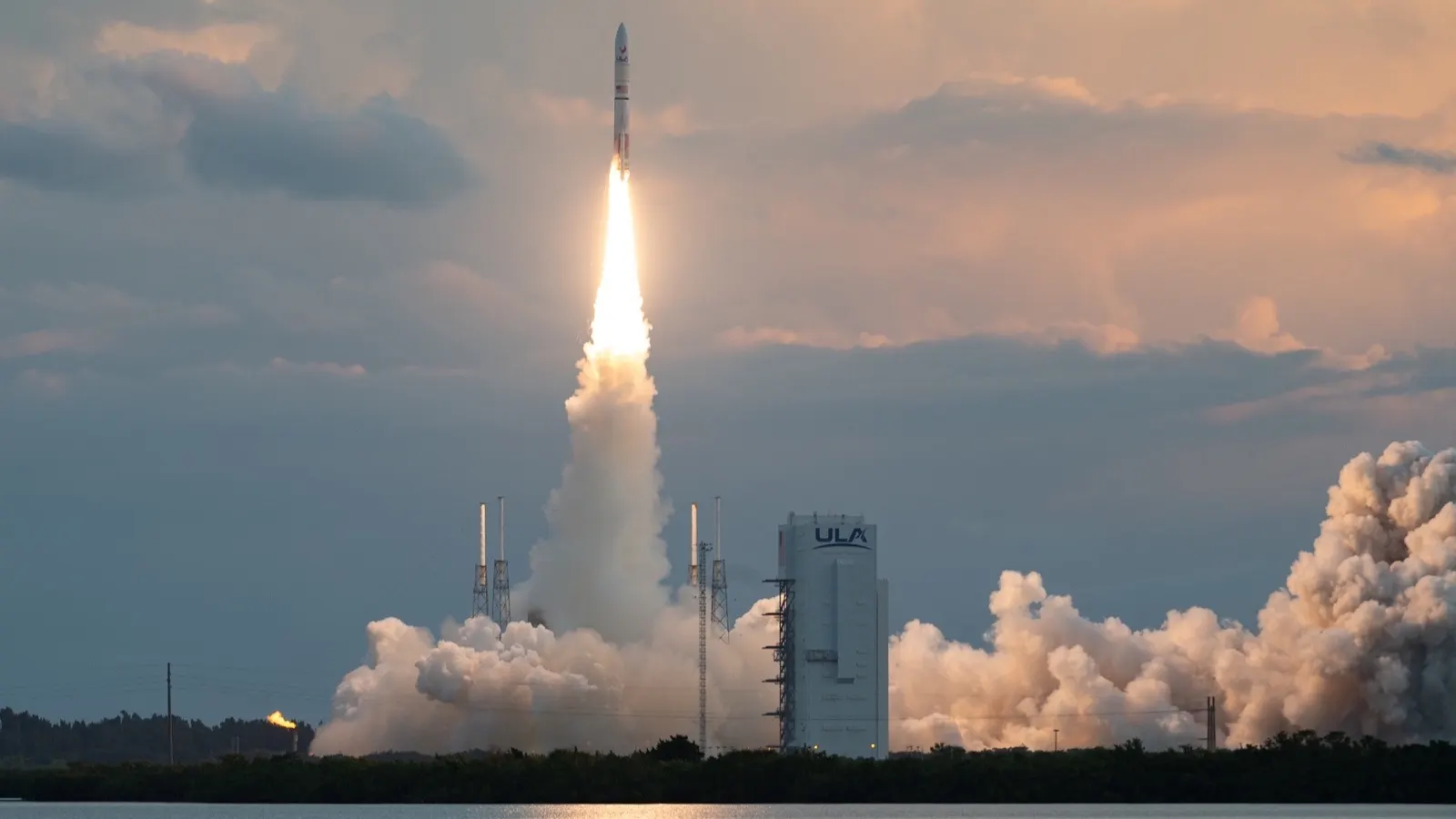
Amazon says it lost 40 Leo internet satellites after a United Launch Alliance Vulcan rocket encountered a problem on Sunday. The mission lifted off from Cape Canaveral, Florida, at 12:40 p.m. EST on Nov. 15. It was Amazon’s first flight on Vulcan, a rocket the company had expected to carry its biggest batch of broadband satellites on a single mission to that point.
The next launch on Amazon’s mission calendar uses a different rocket. Arianespace is targeting Nov. 23 at the earliest to send 36 Leo spacecraft into low Earth orbit from Kourou, French Guiana. The two calendars help explain how a failed flight can cost Amazon an entire group of satellites while a separate provider continues getting ready to launch.
Two missions, two launch providers
LV-01, Nov. 15. United Launch Alliance’s Vulcan carried 40 satellites from Space Launch Complex 41 at Cape Canaveral Space Force Station. ULA’s preflight manifest described the configuration built for that payload. Amazon later said the payload was lost. ULA said the vehicle encountered an anomaly about 10 minutes into flight, according to Spaceflight Now’s account of the launch and company statement.
LE-04, Nov. 23 at the earliest. Arianespace plans to use an Ariane 6 and a different launch site. Its announcement calls this flight VA271 and lists 36 satellites. The company expects to set a more precise launch window closer to liftoff.
Amazon’s preview for the Vulcan flight already listed the November Ariane mission. That shows the 36 spacecraft belong to a scheduled batch that predates the loss. If the launch succeeds, it will add 36 deployed satellites on that mission. The 40 lost on Vulcan would still be missing from the deployment Amazon had planned across the two flights.
Why the satellite counts describe different things
Amazon says it completed its 1,000th satellite in early September and has hundreds of flight-ready spacecraft. That number describes manufacturing. Launch operators then count how many spacecraft a mission carries and deploys. Service availability is a different measure again. A spacecraft has to reach orbit and complete the work required to join the communications network. A launch photo or a total of completed vehicles can reveal how far one part of the program has progressed. Household broadband availability depends on a separate service announcement.
Arianespace reports a narrower count of its own. If LE-04 deploys all 36 satellites, it says it will have delivered 136 spacecraft for Amazon. Subtracting the planned payload gives 100 attributable to the provider before that flight. This is the launch partner’s contribution to the constellation. Readers comparing its total with Amazon’s manufacturing figure are looking at different stages of the same project.
What counts as a successful deployment
Launch coverage can make several milestones look like one event. Liftoff shows that the vehicle cleared the pad. Delivery means the payload reaches the planned orbit and is released. A mission can pass the first milestone and miss the second. That is why the satellite count in the manifest has to be paired with the operator’s report of what reached orbit.
ULA’s preflight material called for placing this payload in orbit about 285 miles above Earth. That figure describes the mission plan. Establishing operations would then be Amazon’s job, including integrating the newly deployed spacecraft into the network. For a reader tracking service, the relevant dates are thus the launch date, the confirmation of deployment and a separate announcement about when and where service is available.
What the failure leaves open
Amazon’s description establishes the loss and the affected mission. ULA’s reported timeline narrows when it recognized a problem. A root-cause finding would answer a different question about what triggered it and whether a design, equipment or operational change is needed. Until the company or a regulator provides a verified finding, the time of the anomaly is the most specific conclusion the public record supports.
In the near term, the next visible milestones are a launch window for Ariane 6 and a confirmed result if it flies. ULA has a separate recovery question involving its Vulcan vehicle. For related coverage of how a single mission can produce different outcomes for its rocket and payload, see Newsmerica’s account of Starship Flight 15.
Trust & transparency
How we handled this story
Checked Amazon’s mission log and dated loss confirmation, ULA’s planned 40-satellite manifest, Arianespace’s LE-04 schedule, and independent Spaceflight Now coverage.

Grounded in this reporting
Ask Newsmerica
Ask about this article. Answers quote the closest published passages and link back to their sources.
This tool retrieves article passages; it does not add outside facts.Keep exploring