Democrats nominate Hakeem Jeffries for House speaker
Democrats nominated Hakeem Jeffries for speaker. The full House still has to vote, with the winning threshold determined by votes cast for a person.
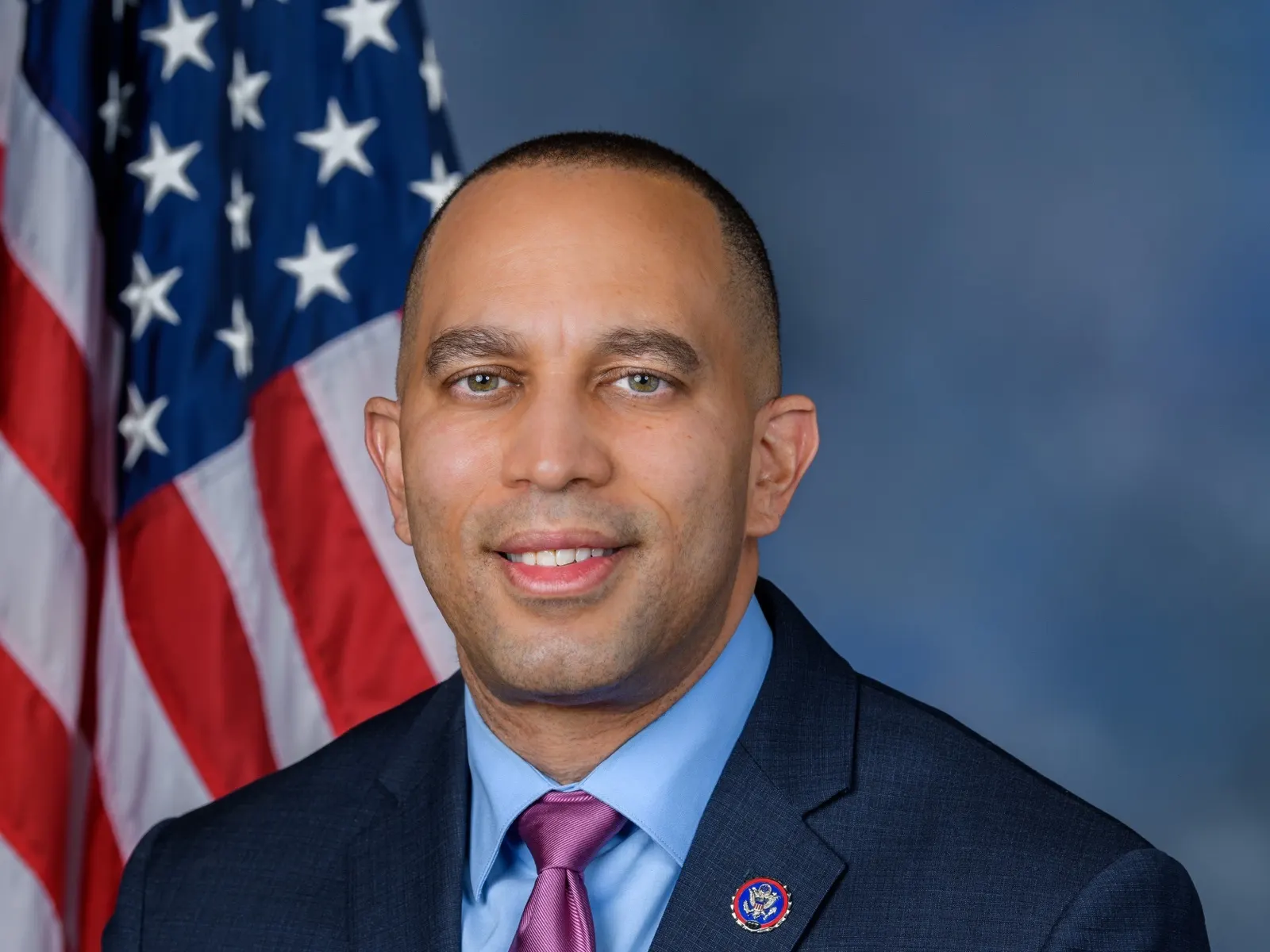
House Democrats have nominated Hakeem Jeffries to become speaker when the next Congress convenes, advancing their leadership transition after the midterm elections. The choice establishes the party’s candidate for the office. A separate vote of the full House will determine who takes the gavel.
In a Nov. 18 statement and press conference, Jeffries described himself as the Democratic nominee for speaker and appeared with Katherine Clark, the incoming majority leader, and Pete Aguilar, the incoming majority whip. He said Democrats would focus on affordability and government accountability in the 120th Congress.
The transition has immediate political importance because the speaker helps shape how the House organizes its work. For readers trying to follow the next steps, however, the party announcement and the floor election need separate dates and descriptions. The nomination is now established. The House’s later recorded vote will establish the result for the chamber.
How a party nomination reaches the House floor
The Congressional Research Service’s speaker-election guide describes the customary sequence. Each party chooses a nominee through its own internal procedures. Before the floor vote, members formally place candidates’ names in nomination. The House then conducts a roll call in which members state the name of the person they support.
Members can vote for someone other than their party’s nominee. They can also answer present or decline to cast a vote. That freedom makes the floor roll call a distinct test of support. A caucus decision tells readers who the party selected. It does not supply every answer that members will give when their names are called in the chamber.
At the start of a new Congress, the Clerk presides over the proceedings used to elect the speaker. The House’s organization then proceeds through additional steps. Readers following the transition should look for the Clerk’s actual schedule and record rather than infer a completed election from the title used in a party announcement.
Why the winning number can change
The threshold is a numerical majority of the votes cast for a person by name, assuming a quorum. With 435 votes cast for named people, the majority is 218. But the denominator can change when members are absent or answer present. A response of present is excluded from the tally of votes cast for a named individual.
The following examples use hypothetical roll calls to show the arithmetic. They are illustrations of the rule and do not predict January’s attendance or votes.
- 435 votes for named people — Half is 217.5, so a candidate needs at least 218.
- 430 votes for named people — Half is 215, so the majority threshold is 216.
- 420 votes for named people — Half is 210, so a candidate needs 211.
A useful way to calculate the threshold is to divide the named-person vote total by two, discard any fractional part and add one. The calculation requires the actual roll call. Party seat totals alone cannot establish it because seats held, members attending and named-person votes are related but different counts.
There is also a meaningful difference between voting for another person and answering present. A vote for another named person remains in the denominator and directs support elsewhere. A present response reduces the number of named-person votes. Those choices can therefore have different effects even when neither is a vote for the leading candidate.
What happens if nobody wins the first ballot
Under the procedure described by CRS, the House repeats the roll call if no candidate receives the required majority. Members remain free to choose an individual on later ballots. The process does not automatically eliminate the person with the fewest votes or move to a two-candidate runoff.
That means the facts to record after each ballot are the candidate totals, votes for other named people, present responses and the resulting threshold. A leading candidate can have more support than anyone else and still fall short of a majority. Conversely, a threshold lower than 218 can be sufficient when fewer members cast named-person votes.
For a reader watching live coverage, those totals offer a more precise guide than a general description of party unity or division. The decisive question is whether the candidate has crossed the threshold generated by that ballot. Political negotiations matter because they can change the subsequent votes, but the roll call supplies the measurable outcome.
What Democrats say they want to do
Jeffries’ Nov. 18 remarks emphasized the cost of groceries, gas, housing and health care, alongside investigations of alleged government misconduct. Those statements describe the incoming leadership’s agenda. Specific proposals will need their own text, timetable and votes before readers can assess their effects.
For an affordability measure, useful questions include who qualifies, how the proposal changes an existing program, how it would be funded and when the change would take effect. A leadership pledge alone supplies few of those details. The relevant bill, committee materials and later amendments will allow a more concrete comparison.
Oversight has its own procedural path. A request to preserve records, a document demand, a hearing and a legislative response can occur at different stages. Newsmerica’s coverage of a House referral to the Judiciary Committee illustrates how a recorded procedural action needs to be distinguished from the later decisions it may lead to.
What to watch before the new Congress begins
The next evidence to follow is the announced floor schedule, the formal nominations and the speaker roll call itself. The official record will show each member’s choice and whether a candidate received the required majority. Committee assignments and procedural rules will provide additional information about how the new House plans to work.
Readers can use the House Clerk’s website for chamber records and announcements. A leadership title in a press release describes the position being sought or anticipated. The election record documents the chamber’s action at the point it occurs.
For now, Democrats have made their choice of nominee. The remaining floor process will turn that party decision into a test of support across the House. Newsmerica’s Politics desk will follow the published records, the practical consequences of proposed legislation and the steps that give each congressional action its effect.
Trust & transparency
How we handled this story
Reopened Jeffries’ Nov. 18 official statement and corroborating current coverage. Checked CRS R44243 on nominees, floor roll calls and the majority of votes cast for a named person. Numerical roll-call examples are clearly hypothetical calculations, not election forecasts.

Grounded in this reporting
Ask Newsmerica
Ask about this article. Answers quote the closest published passages and link back to their sources.
This tool retrieves article passages; it does not add outside facts.Keep exploring