KFC franchise operator Tasty Chick’n files for Chapter 11
Court records explain which KFC franchise operator filed, where its 84 restaurants were concentrated and what the lease requests mean.
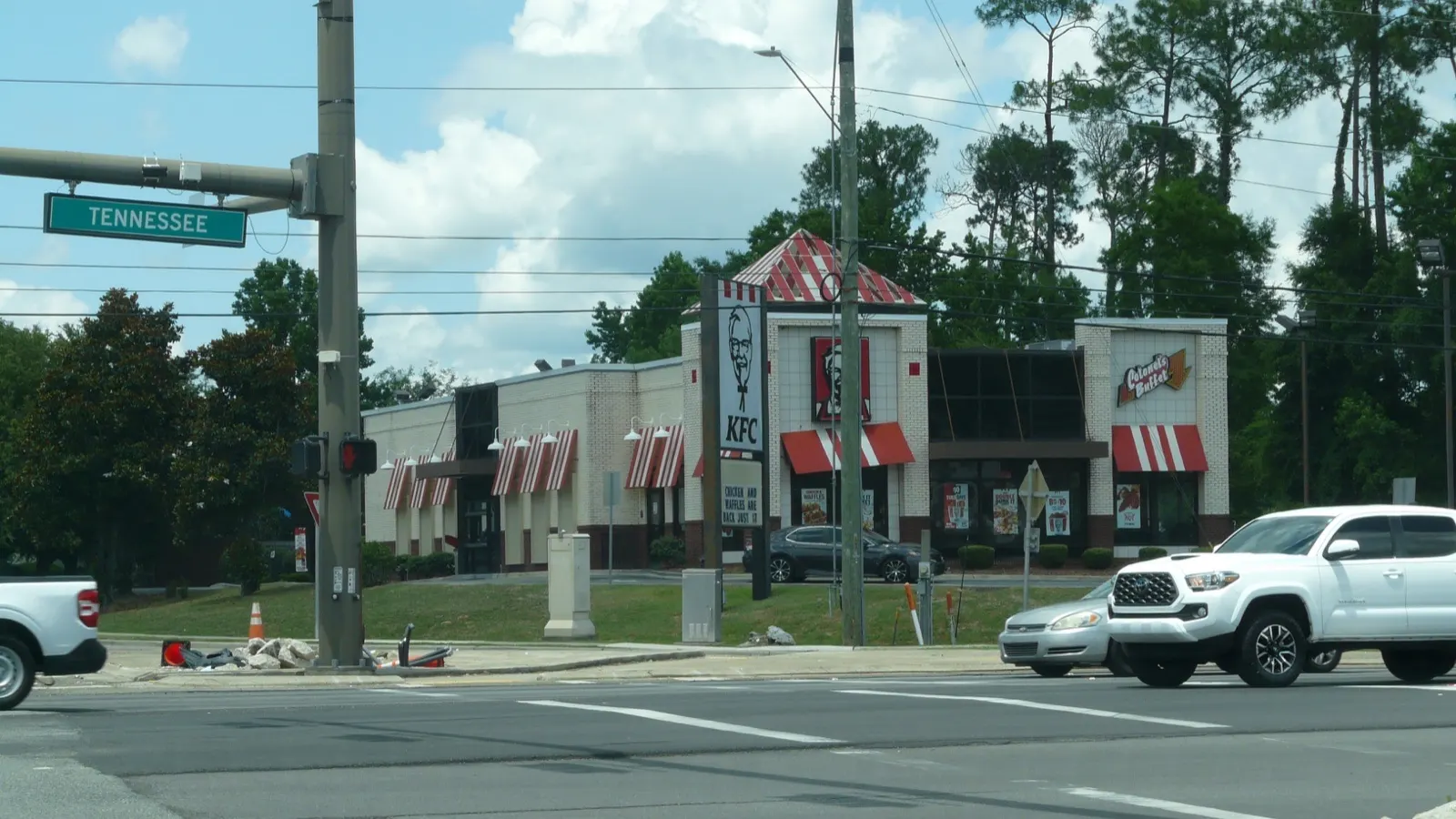
Tasty Chick’n, a franchise operator with 84 KFC and KFC–Taco Bell restaurants, filed for Chapter 11 bankruptcy protection in Houston on Nov. 16. The operator says it wants to pursue a court-supervised sale while exploring a standalone restructuring. Its first-day declaration also describes a request to reject certain restaurant leases, including leases for sites already out of operation or winding down.
The bankruptcy filing names Tasty Chick’n and three affiliates as debtors. The company’s restaurant count covers the portfolio it said it owned or operated on the filing date. Customers trying to determine whether a particular KFC is still serving need a more specific piece of evidence: the status of that street address.
How to read the numbers in the court filing
Chief executive Thomas Scott’s declaration counts 75 KFC restaurants and nine locations that combine KFC and Taco Bell. It groups the 84 sites into five geographic markets. Florida accounted for 23 and Tennessee for 22. Together those two states represented 45 of 84 locations, or about 54% of the operator’s reported footprint. That calculation describes where the company’s restaurants were concentrated at filing. Each store may have a different operating or lease status.
The rest of the portfolio was spread across Virginia, Arkansas, Missouri, Mississippi, Alabama, Kentucky, Illinois and Indiana. The franchise agreements allow the operator to use KFC and Taco Bell branding. The restaurants counted in the declaration are Tasty Chick’n properties or operations under those agreements. Other operators run restaurants under the same brands.
The bankruptcy docket identifies two separate filings on leases: the initial motion, docket entry 15, and a supplemental filing, entry 51. The declaration filed with the court describes leases associated with locations in different circumstances, including restaurants with weak profitability. For a specific shop, useful evidence would be a dated lease exhibit tied to that address, the resulting court order and confirmation of current trading hours. Those records answer different questions.
What the company says squeezed its restaurants
The declaration says food, labor and operating expenses rose while sales and store margins came under pressure. It reports that store-level margins fell from 11.8% in fiscal 2023 to about 4.0% so far in fiscal 2026, a decline of 7.8 percentage points. At those margins, the same $100 of sales would yield $11.80 on the earlier measure and $4.00 on the later one, before considering changes in sales volume. These are the franchisee’s figures on its store-level measure.
Scott’s filing says about 37 restaurants face significant remodel or refresh requirements through 2029. It also describes a September notice of intent to terminate franchise agreements. According to the declaration, the Yum affiliates asserted nearly $15.7 million in unpaid charges, including royalties, advertising contributions and technology fees. That figure is the amount the franchisors asserted as described in the filing.
As restaurant trade publication Nation’s Restaurant News reported, the filing comes amid other restructurings in the franchise sector. For context on why company-wide and location-level numbers can diverge, Newsmerica’s Walmart earnings coverage looks at the different measures a national retailer uses to describe performance. The Tasty Chick’n filing is a look at the economics of one operator under a national brand.
What customers and workers can check
Customers planning a trip can start with the KFC store locator and confirm hours directly with the restaurant when possible. A shop’s posted hours and ordering availability may change before a directory listing catches up. For a gift card, the declaration says a separate company is responsible for issuing the cards and the debtors handle acceptance and settlement at qualifying outlets. That arrangement makes the card issuer and the status of the outlet relevant when checking whether a particular card can be used there.
For employees, the franchise operator identified on a pay statement or other employment record provides a more direct starting point than the sign on the building. The filing covers multiple operating entities as well as a separate debtor that held real estate. An address appearing in a lease filing does not establish the timing of individual employment decisions.
A later court order, a sale agreement or a confirmed change at a restaurant could make a location’s future clearer. The declaration describes the sale as a proposal and says the debtors will explore alternatives. The docket is where a reader can follow orders and further filings in case 26-90831.
Trust & transparency
How we handled this story
The Nov. 16 CEO declaration and docket support the entity, footprint, reported store-level margin comparison and lease requests. Individual closure status requires address-level verification.

Grounded in this reporting
Ask Newsmerica
Ask about this article. Answers quote the closest published passages and link back to their sources.
This tool retrieves article passages; it does not add outside facts.Keep exploring
More from Newsmerica
Related coverage
Business & Economy
Black Friday 2026 dates for Walmart, Target, Best Buy and Home Depot

Business & Economy
30 states join FTC’s Dollar General lawsuit as Family Dollar deal awaits approval

Business & Economy