Trump calls Manhattan congestion pricing “a killer” as the toll remains in effect
Trump renewed his opposition to Manhattan’s congestion toll. See the MTA’s current rates, a five-day cost estimate and where the appeal stands.
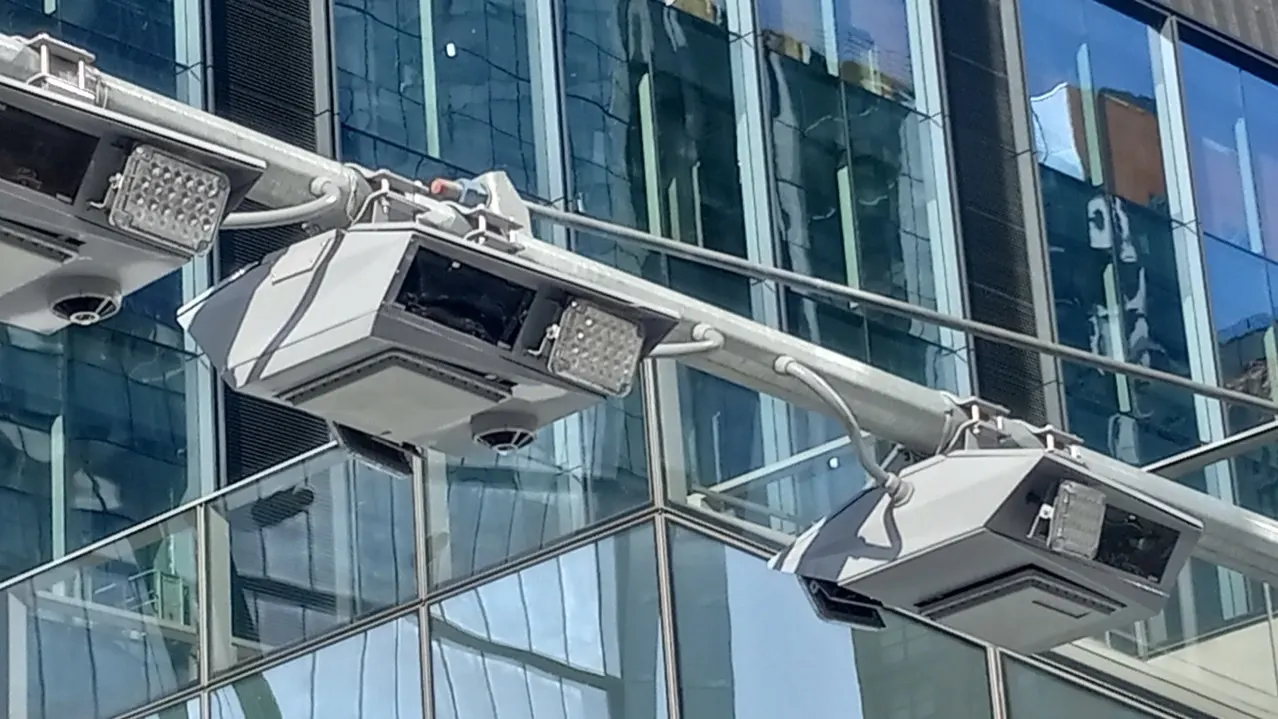
President Donald Trump called Manhattan’s congestion pricing toll “a killer” in a Nov. 24 interview and said he opposed allowing similar programs in other U.S. cities. His remarks renewed a dispute that has already produced a federal court ruling and an appeal. The Metropolitan Transportation Authority’s current guidance still lists the toll for drivers entering the Congestion Relief Zone.
In the original New York Post interview, Trump argued that the charge was too costly for people who drive to jobs in Manhattan. That criticism is a policy position. The records that govern what a driver pays are the MTA’s toll schedule and the orders in the federal case.
What a driver pays to enter the zone
The MTA’s Congestion Relief Zone guidance covers Manhattan streets at or below 60th Street, subject to listed highway exceptions. Its published toll schedule lists a $9 peak toll and $2.25 overnight toll for a passenger vehicle with a valid E-ZPass. Passenger vehicles are generally charged once per day for entering. Toll-by-mail rates differ. Eligible drivers entering from certain tolled crossings may also receive a credit during peak hours.
| Passenger vehicle with E-ZPass | Published charge |
|---|---|
| Peak entry | $9 before any credit or discount |
| Overnight entry | $2.25 before any discount |
| Difference between the two base rates | $6.75 |
For a commuter making five peak entries on five days, the base charge adds up to $45 a week, before any crossing credit, discount, or separate bridge or tunnel toll. The MTA’s low-income program offers qualifying drivers a 50% discount after ten trips in a calendar month. That is a concrete way to check what an individual could pay. A general claim about whether a toll exceeds someone’s earnings depends on their wage, hours, route and eligibility.
What the MTA’s traffic counts show
Newsmerica compared two periods of four complete weeks in the MTA’s public vehicle-entry dataset, Oct. 6 through Nov. 2 in 2025 and Oct. 5 through Nov. 1 in 2026. Each runs Monday through Sunday four times. The agency’s recorded zone entries fell from 14,255,461 to 13,967,154, a decrease of 288,307 entries, or about 2.0%. The category for cars, pickups and vans fell from 7,869,484 to 7,466,898, about 5.1%. The calculation sums the dataset’s zone-entry field by date and vehicle class, excluding its separate field for excluded roadways.
Both periods occurred after tolling began. This comparison tracks how entries changed from the first year of the program to the second over comparable weeks. A single driver’s commute could still get longer because entries measure vehicles crossing into the zone, while travel time measures how long a trip takes. Weather, weekday demand and road work can also affect individual trips. The counts give readers one way to check the traffic debate without treating the change as a measure of every journey or as a causal estimate of the toll’s impact.
The MTA uses the toll to support its capital program. Its capital dashboard identifies projects connected to the revenue, including accessibility work and modern signal systems. That creates a different measure for the policy debate. A traffic count describes what crossed the zone boundary. The dashboard records how the agency is using the financing the toll supports.
How the legal dispute reached an appeal
The tolling program began in January 2025 after a federal agreement under the Value Pricing Pilot Program. Federal officials subsequently attempted to terminate approval. In March 2026, U.S. District Judge Lewis Liman set aside that termination, finding the agencies lacked authority to unilaterally end the agreement on the grounds asserted.
The federal defendants filed an appeal, Second Circuit case 26-1213. A separate October district court order denied a discovery request in a dispute over compliance with the preliminary injunction. That order addressed discovery. The MTA’s published guidance remains the practical reference for the toll itself. A future court order or agency action would provide the basis for reporting a change.
The interview also addressed congestion pricing outside New York. The Manhattan case concerns the authority to terminate a specific federal agreement. A proposal in another city would have its own legal route and facts. Travelers can check the Thanksgiving storm guide for the separate weather and travel advisories affecting New York.
Trust & transparency
How we handled this story
Newsmerica checked the original Nov. 24 interview, MTA rates and vehicle-entry dataset, the March district court order and the Second Circuit docket.

Grounded in this reporting
Ask Newsmerica
Ask about this article. Answers quote the closest published passages and link back to their sources.
This tool retrieves article passages; it does not add outside facts.Keep exploring