Trump and NATO chief Mark Rutte discuss preventing Russia’s war from spreading
Trump and NATO chief Mark Rutte discussed Ukraine and defense investment in Florida. See what the joint statement said and what Kyiv reported separately.
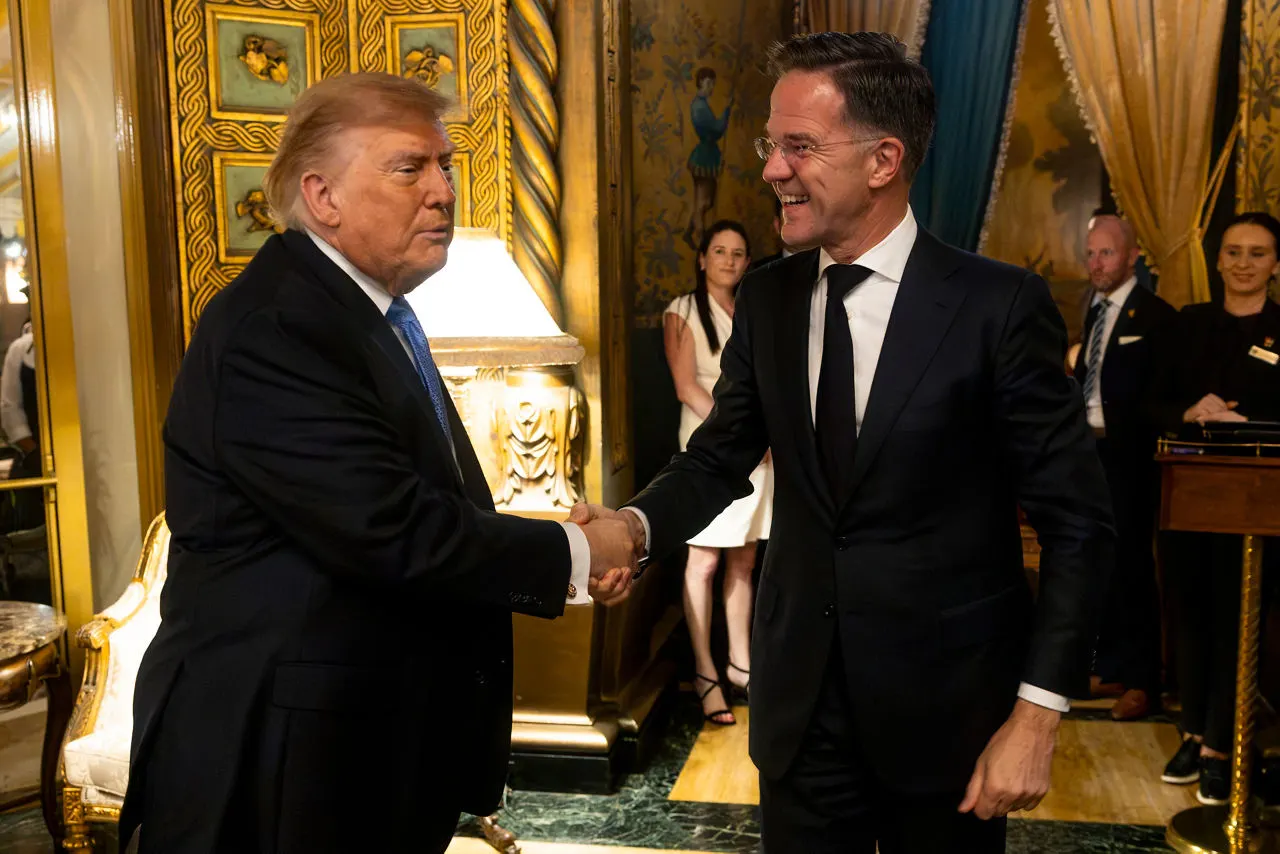
President Donald Trump and NATO Secretary General Mark Rutte discussed how to prevent Russia’s war in Ukraine from spreading when they met at Mar-a-Lago on Nov. 25. Their joint statement, published by NATO on Nov. 26, also called for continued investment in defense and described Iran as another major topic.
Trump said separately that he had urged Russian President Vladimir Putin during earlier talks in China to pull back military aggression in Europe, Reuters reported. That was Trump’s account of a conversation. The new NATO statement describes what he and Rutte discussed and announces neither a ceasefire agreement nor an American delivery commitment.
Three records with different implications
The Mar-a-Lago talks followed the Nov. 19 meeting in Shenzhen among Trump, Putin and Chinese President Xi Jinping. The White House’s published declaration from that meeting provides a record of the three leaders’ shared language. The NATO statement a week later comes from a different meeting with different participants.
| Record | What it establishes |
|---|---|
| Nov. 19 White House declaration | Published language from the U.S., Russian and Chinese leaders’ Shenzhen meeting |
| Nov. 25 Ukrainian presidential address | Ukraine’s account of additional commitments and its request for faster deliveries |
| Nov. 26 Trump–Rutte statement | The U.S. president and NATO chief discussed regional spillover, a peaceful resolution and investment |
The middle entry gives a concrete measure of what Kyiv said it had secured. In a Nov. 25 address, Ukrainian President Volodymyr Zelenskyy said talks with Ukraine’s partners had yielded additional packages, including more than $700 million for the Prioritised Ukraine Requirements List. He also said he had received no good news from the United States on accelerating deliveries. Those were separate statements about pledged support and the timing of delivery.
For someone following the diplomacy, the documents answer different questions. The joint statement shows where two leaders aligned publicly. The Ukrainian presidential address reports a funding development from a separate forum. Evidence of a shipment or an agreed ceasefire would come from a subsequent decision or verified implementation on its own timeline.
How the defense spending language fits into NATO’s earlier commitments
Trump and Rutte referred to prior NATO summits and called for further investment in defense and industrial capacity. The Hague Summit Declaration supplies the figures behind that language. In 2025, the allies pledged to invest 5% of GDP annually by 2035 across two categories. At least 3.5% is for core defense requirements. Up to 1.5% can count toward broader defense and security investments, including infrastructure and preparedness.
The declaration calls for a review in 2029 and for allies to submit plans showing how they will reach the target. Those are longer-term commitments, separate from individual decisions about military assistance and when it reaches Ukraine. The meeting in Florida did not set a new percent target, allocate a U.S. budget amount or publish a timetable for transfers to Ukraine. For Americans tracking policy, a statement on allied investment and a congressional funding measure are different milestones, each with its own record.
What to watch after the meeting
A subsequent U.S. or NATO statement could add an amount, a delivery schedule or an agreed next step in talks. A reported conversation with Putin adds context to Washington’s position, while a confirmed agreement would require evidence of the terms and the parties accepting them. Newsmerica’s coverage of the Shenzhen declaration and its guide to NATO consultations and collective defense explain the earlier diplomatic and treaty context.
Trust & transparency
How we handled this story
Newsmerica checked NATO’s joint statement and Hague declaration, the White House Shenzhen declaration, Ukraine’s Nov. 25 address and Reuters reporting.

Grounded in this reporting
Ask Newsmerica
Ask about this article. Answers quote the closest published passages and link back to their sources.
This tool retrieves article passages; it does not add outside facts.Keep exploring