Trump jokes about Stephen Miller running for president at White House briefing
Trump asked Stephen Miller if he wanted to run after comparing him with JD Vance and Marco Rubio. Here is where the joke fit in the briefing.
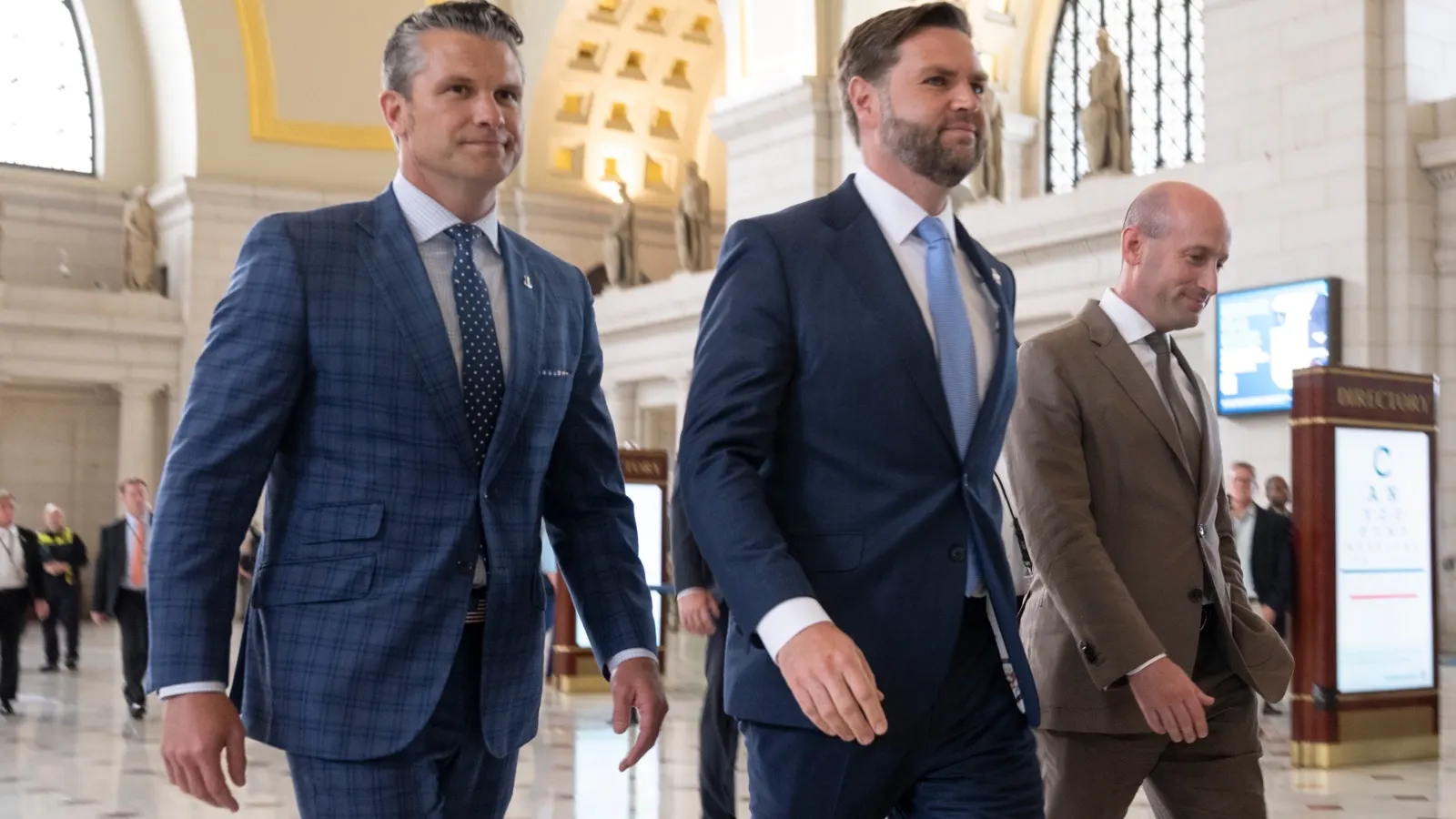
President Donald Trump joked Friday that White House Chief of Staff Stephen Miller had outperformed Vice President JD Vance and Secretary of State Marco Rubio at a press conference, then asked Miller, “Do you want to run for president?” The remark came after Miller spoke from the podium at Trump’s Nov. 20 news conference following his Asia trip.
The exchange came near the close of the event. Trump invited Miller to speak after fielding questions from reporters. Miller used his turn to praise the administration’s record. Trump then returned to the microphone, compared Miller’s performance at the podium with the other two officials and posed the question. The event moved on to the military musicians Trump was preparing to recognize. The White House carried the event live, and the exchange appears about 1 hour and 23 minutes into this time-coded transcript of the briefing.
Where the joke fits in the briefing
The transcript separates the speakers and marks their turns. At about 1:21, Miller begins his remarks after Trump calls on him. The chief of staff spends roughly two minutes praising the president and discussing the administration’s record. At about 1:23, Trump takes over, makes the comparison and asks his question. The next subject in Trump’s remarks is the military bands.
That order matters for anyone who sees a short clip starting with the question about running. Trump’s reference to the two other officials follows Miller’s speech and refers back to others who were at the event. The discussion that came before it centered on the administration’s trip and policy questions. Reuters described the comparison as an apparent joke about the officials’ public speaking.
What the exchange shows in context
The public record offers two useful dates for following Miller’s job. On Nov. 6, Trump announced Miller would succeed Susie Wiles as chief of staff. At the Nov. 20 briefing, Trump introduced him in that capacity before handing him the microphone. Vance and Rubio were there in their administration roles following the Asia trip.
The room included three officials with separate roles:
| Official | Role at the Nov. 20 briefing |
|---|---|
| Stephen Miller | White House chief of staff. Trump announced his appointment Nov. 6 to succeed Susie Wiles. |
| JD Vance | Vice president, elected on the 2024 ticket with Trump. |
| Marco Rubio | Secretary of state, the administration’s top diplomat. |
The White House appointment announcement is the record of Miller’s formal job change. The Nov. 20 exchange was an aside at a press event. The administration lists the current roles of Vance and Rubio separately.
The titles point to different sources of authority. Miller holds a White House staff appointment made by the president. Rubio’s position appears on the Cabinet roster. Vance holds an elected office with duties of its own, including the constitutional role of presiding over the Senate and breaking tie votes. Those records establish the officials’ jobs. The comparison Trump made Friday was about the speeches in the room.
What would establish a presidential campaign
A public launch statement would establish a politician’s stated intent. A filing would provide a different kind of record. The Federal Election Commission’s registration guidance says a person ordinarily becomes a federal candidate for campaign-finance purposes when authorized campaign activity raises or spends more than $5,000. The candidate then generally has 15 days to designate a principal campaign committee by filing a statement of candidacy.
Exploring a run can come earlier. The FEC’s testing-the-waters guidance lists polling and travel as examples of activity that can help a person decide whether to run. Money raised or spent for that purpose generally counts toward the threshold once the person decides to run or begins campaigning. The commission identifies both the activity and the money involved, which gives reporters a way to distinguish exploration from the filing stage.
In a hypothetical case, someone spending $6,000 solely on permissible exploratory activity could still be deciding. If that person then decided to launch a campaign, the exploratory spending would count toward the $5,000 registration threshold. The same amount spent on authorized campaigning would cross that threshold under the ordinary rule. The example illustrates the FEC distinction and makes no assumption about Miller’s plans.
Registering a campaign also comes before a party’s selection of its nominee. USAGov’s presidential election guide describes the role of primaries, caucuses and conventions in that process. For readers following speculation about 2028, the first concrete evidence would be a person’s announcement or campaign activity and, as appropriate, the corresponding filing. Friday’s exchange records what Trump said at the podium.
The press conference also dealt with policy. Newsmerica covered the separate remarks on overseas data centers and the U.S. chip rule and checked Trump’s gasoline-price claim against federal data.
Trust & transparency
How we handled this story
The White House live post and the time-coded briefing transcript establish the order of the exchange. Reuters independently describes the joke. The White House appointment notice, the Senate and FEC guidance verify official jobs, candidacy rules and the 15-day designation requirement.

Grounded in this reporting
Ask Newsmerica
Ask about this article. Answers quote the closest published passages and link back to their sources.
This tool retrieves article passages; it does not add outside facts.Keep exploring