Fed officials outline how AI could reshape jobs and financial risk
Kevin Warsh considered three paths for growth and employment. Michael Barr traced how AI suppliers and customers can share financial risks.
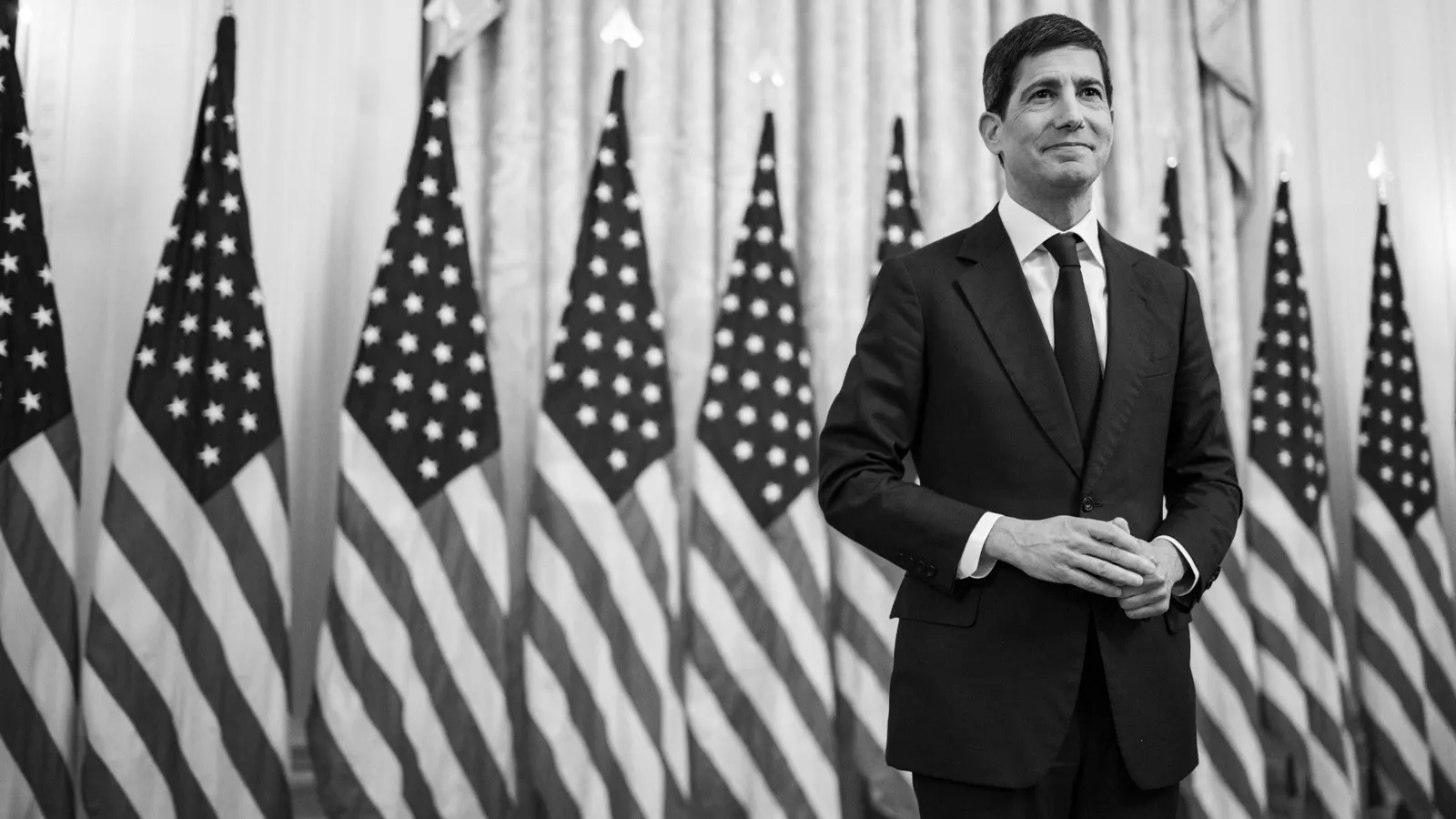
Two Federal Reserve officials put different questions about artificial intelligence on the table Monday. Fed Chair Kevin Warsh asked how widely the gains from the technology could spread through the labor market. Governor Michael Barr examined the financial arrangements supporting the buildout and how companies could share the losses if demand or asset values disappoint.
Read together, the speeches explain how the same investment boom could show up in two places. Employers can use AI to change how workers do their jobs. Investors, suppliers and lenders can also be exposed to the cost of equipment and buildings that companies put in place before their customers’ spending is known.
Warsh’s three paths for jobs and growth
At a Fed conference in San Francisco, Warsh described three illustrative scenarios. The first is a broad productivity gain. If the technology helps workers and businesses produce more with the resources they have, and the gains are shared broadly, output could grow above its longer-run pace while employment stays strong.
In the second scenario, productivity still rises but the job market has a harder time adjusting. Companies can produce more as they automate some tasks while workers whose jobs disappear take time to find new ones. In that case, above-average economic growth and higher unemployment could happen together. Output measures production. Unemployment measures whether people looking for work can find it.
The third scenario begins with disappointing returns on investment. Companies and investors have already committed money. If the expected gains fail to materialize, valuations could fall, spending and investment could weaken, and unemployment could rise. Warsh said Fed staff were using models to examine contingencies. The examples show the range of outcomes he wants policymakers to consider.
Barr’s question is who bears the cost
Speaking at a finance conference in Milan, Barr described several ways AI buyers and suppliers become financially linked. A cloud provider or chip company can invest in a smaller AI business. That business can then spend some of the proceeds buying hardware or renting computing power. The supplier has a customer and an ownership stake in the same smaller business.
A guarantee creates a different link. Imagine a data-center operator borrows against the value of its computer chips. A larger company may agree to support the resale value of those chips if the loan goes bad. If used hardware loses value quickly and the operator defaults, the lender can look to the collateral and, subject to the agreement, to the guarantor. The exposure extends beyond the company that originally borrowed the money.
Barr distinguished those financing links from the ordinary business risk of buying equipment. He also discussed risks outside the data center, including the possibility that similar AI models could react in the same way during a market shock. Similar signals can prompt many traders to try to trade in the same direction. That matters most when a market has limited buyers or sellers willing to take the other side.
How much of corporate borrowing is tied to computing
The Fed’s November Financial Stability Report offers a benchmark for the shift in financing. It estimated that advanced computing-related borrowing took up about 31% of nonfinancial investment-grade corporate debt issuance in its 2026 data, up from less than 6% in 2023. That puts the later share roughly five times the size of the earlier share. The denominator is debt issued by nonfinancial companies in that credit category. The figures describe where new borrowing went and use the report’s definition of advanced computing.
That denominator matters. A growing slice of new bonds tied to data centers changes what investors are exposed to when they buy that debt. To understand possible losses, readers still need to know who owes the money, whether a guarantee applies, and the value of the collateral if it has to be sold. The Fed also points to borrowing in private markets, where the total is harder to measure.
What would show up in the numbers
To track Warsh’s labor-market scenarios, the useful comparison is between output and employment over time. A stronger production figure accompanied by weakening hiring would raise a different set of questions from growth accompanied by rising employment. Industry data can also help distinguish broad labor shifts from disruptions at a few large employers.
For Barr’s financing question, company filings offer different clues. Capital spending shows how much a company has spent on assets. Debt, lease commitments, guarantees and related-party disclosures show how portions of the buildout may be financed or supported by other companies. Revenue from outside customers can help establish whether the operations can sustain themselves after the earliest funding arrangements. Newsmerica’s CoreWeave earnings coverage illustrates why strong sales growth and the cost of financing can deserve attention in the same story.
Both speakers discussed a range of possible outcomes. The remarks provide a way to read future economic releases and company reports by asking two questions separately. Who benefits when productivity rises, and who carries the exposure if expected revenue is late?
Trust & transparency
How we handled this story
Checked Warsh’s and Barr’s Nov. 16 transcripts and AP corroboration. The descriptions are scenarios and examples, with no implied interest-rate decision.

Grounded in this reporting
Ask Newsmerica
Ask about this article. Answers quote the closest published passages and link back to their sources.
This tool retrieves article passages; it does not add outside facts.Keep exploring
More from Newsmerica
Related coverage
Business & Economy
Black Friday 2026 dates for Walmart, Target, Best Buy and Home Depot

Business & Economy
30 states join FTC’s Dollar General lawsuit as Family Dollar deal awaits approval
Business & Economy