Trump jokes about White House ballroom, says next turkey pardon will be held there
Trump said the 2027 turkey pardon would move to the White House ballroom. Here’s what the planning vote and pending Supreme Court case mean.
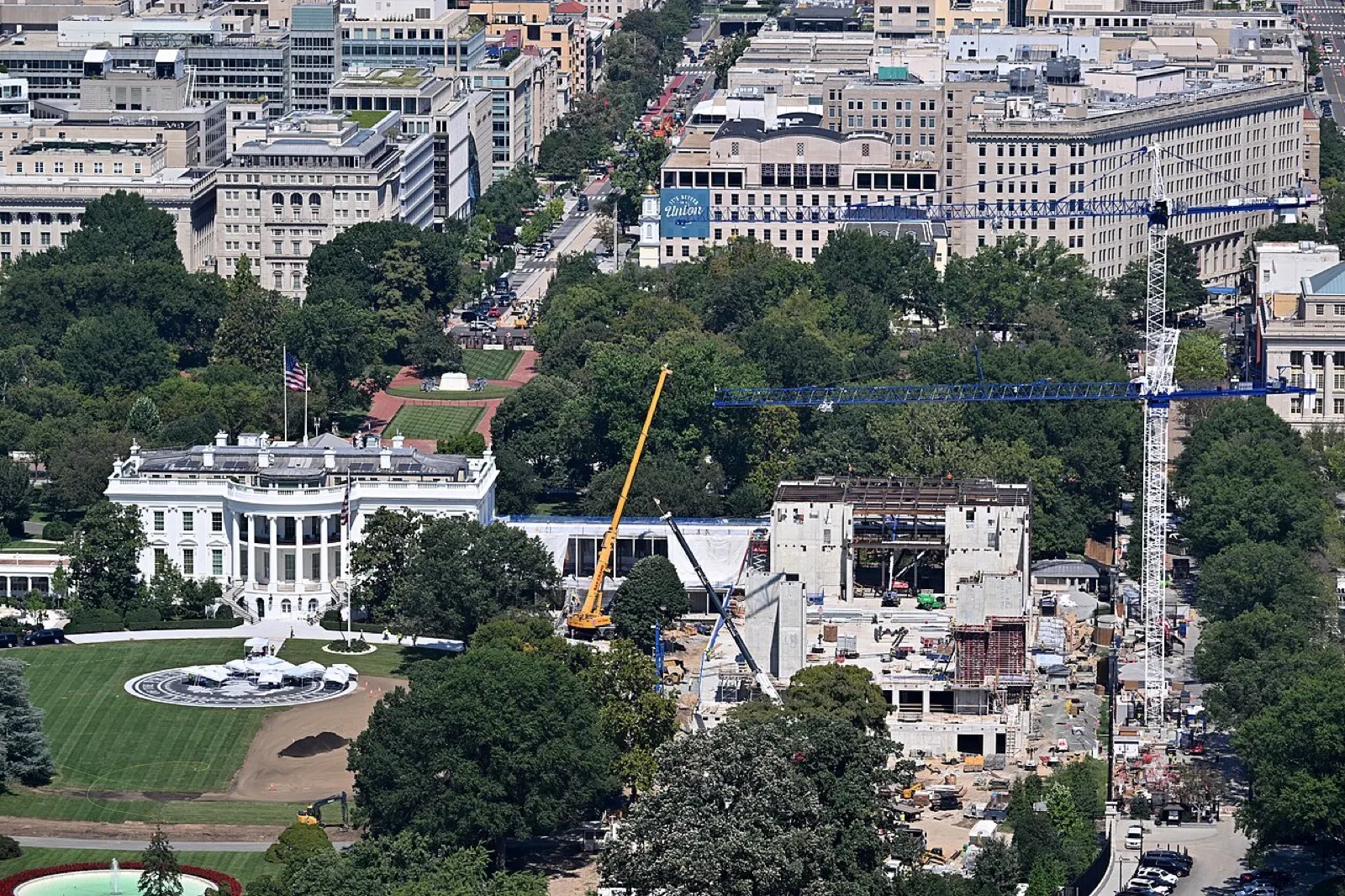
President Donald Trump used the White House turkey pardon on Nov. 24 to announce a different setting for next year’s ceremony. Speaking on the South Lawn helipad, he gestured toward what he called “that rather small ballroom being built.” He said he expected to hold the 2027 turkey pardon there. Cranes and construction crews were visible from Tuesday’s ceremony, where Trump spared the birds Freedom and Feathers.
The joke acknowledged the scale of the building going up where the East Wing once stood. The promise sets an informal deadline by which Trump expects the room to host an event. The Supreme Court docket explains why construction continues. An August order paused an injunction that would have limited above-ground work, and the government has since asked the justices to hear the case.
What Trump said on the helipad
The White House’s event record confirms that the 2026 ceremony took place on the helipad. Roll Call reported from the ceremony that Trump pointed to the ballroom as the venue for the following year. The White House also posted video of the event. The remark gave the public a specific event to watch for in 2027.
Tuesday’s event was held outdoors near the project. Newsmerica’s coverage of the 2026 pardon explains how the White House picked the birds’ names, why Freedom was the official recipient and what Trump said would happen to both birds.
What the federal planning commission approved
The National Capital Planning Commission voted April 2 to approve preliminary and final site and building plans for what it calls the East Wing Modernization Project. The commission described the ballroom as a permanent event space intended to increase capacity for state functions. It heard testimony in March and continued its deliberation to April to consider public comments.
The approved plans already reflected changes from the design submitted for review. The commission said the applicant removed stairs extending from the south portico and changed the stairs at the southwest corner. Those details are examples of what a planning review decides. The court case raises another question about the source and scope of the federal government’s authority to build on the site. The April vote and the August order are therefore separate records, even though both concern the same project.
What the courts have decided so far
The National Trust for Historic Preservation challenged the East Wing project in federal court. The old East Wing had already been torn down when the district court granted an injunction in March 2026. As later clarified, the order generally permitted work on a below-ground military facility while limiting further work above ground. The D.C. Circuit ultimately upheld the injunction, after allowing construction to continue while it considered the appeal.
| Date | Court action |
|---|---|
| Aug. 7, 2026 | The D.C. Circuit upheld the injunction. |
| Aug. 31, 2026 | The Supreme Court stayed the injunction while the government pursued review. |
| Nov. 5, 2026 | The government filed its petition asking the Supreme Court to hear the case. |
| Jan. 6, 2027 | The National Trust’s response is due under the latest scheduling order. |
In its Aug. 31 stay decision, the Supreme Court said the Trust likely lacked standing, the legal requirement for bringing a case in federal court. The Trust relied on a member who said seeing the finished property would harm her aesthetic and historical interests. The court evaluated that theory when deciding whether to keep the injunction paused. The parties’ underlying dispute over authority to carry out the project remains before the courts.
Why the justices split over who can sue
The majority concluded that the Trust likely lacked standing based on its member’s stated objections to how the new building would look. Chief Justice John Roberts, joined by Justices Sonia Sotomayor, Elena Kagan and Ketanji Brown Jackson, dissented. Roberts argued that the member’s history of regularly visiting and studying historic buildings made her alleged injury specific enough to bring the case. He also concluded that Congress likely had not expressly authorized the ballroom under the law governing construction on federal park grounds in Washington.
The disagreement matters because a court can resolve a case on standing before reaching a dispute over statutory authority. The August opinion explains why the justices paused the injunction. The order itself sets out when the pause ends. If the court declines to hear the petition, the stay terminates automatically. If the court takes the case, the stay continues until the court sends down its judgment. That makes a decision on whether to hear the case more consequential for the construction timeline than the January deadline for a filing.
What to watch before the next ceremony
The Supreme Court docket in case 26-599 records the government’s petition and the Nov. 19 order moving the Trust’s response deadline from Dec. 7 to Jan. 6. That January date is for papers from the Trust. The court still has to decide whether it will take the case. The two dockets identify the procedural stages. The August decision is filed as emergency application 26A203. The November petition is filed as 26-599.
The construction schedule answers a separate question. A room may still require finishing or approvals before it can receive guests, even while a court order lets the building work proceed. For people tracking Trump’s promise, the next court document to look for is the Trust’s response. The next practical sign for the ceremony would be a White House schedule that names the ballroom. Follow the Politics desk for updates on the court case.
Trust & transparency
How we handled this story
Newsmerica checked the Nov. 24 event record and on-site quotation, the planning commission’s April vote, both opinions in the August stay and the latest scheduling order in case 26-599.

Grounded in this reporting
Ask Newsmerica
Ask about this article. Answers quote the closest published passages and link back to their sources.
This tool retrieves article passages; it does not add outside facts.Keep exploring