November’s Beaver supermoon rises tonight. When and where to look
The Beaver Moon reached its full phase at 9:53 a.m. ET on Nov. 24. Check local moonrise, where to look, and how the December supermoon date changes by time zone.
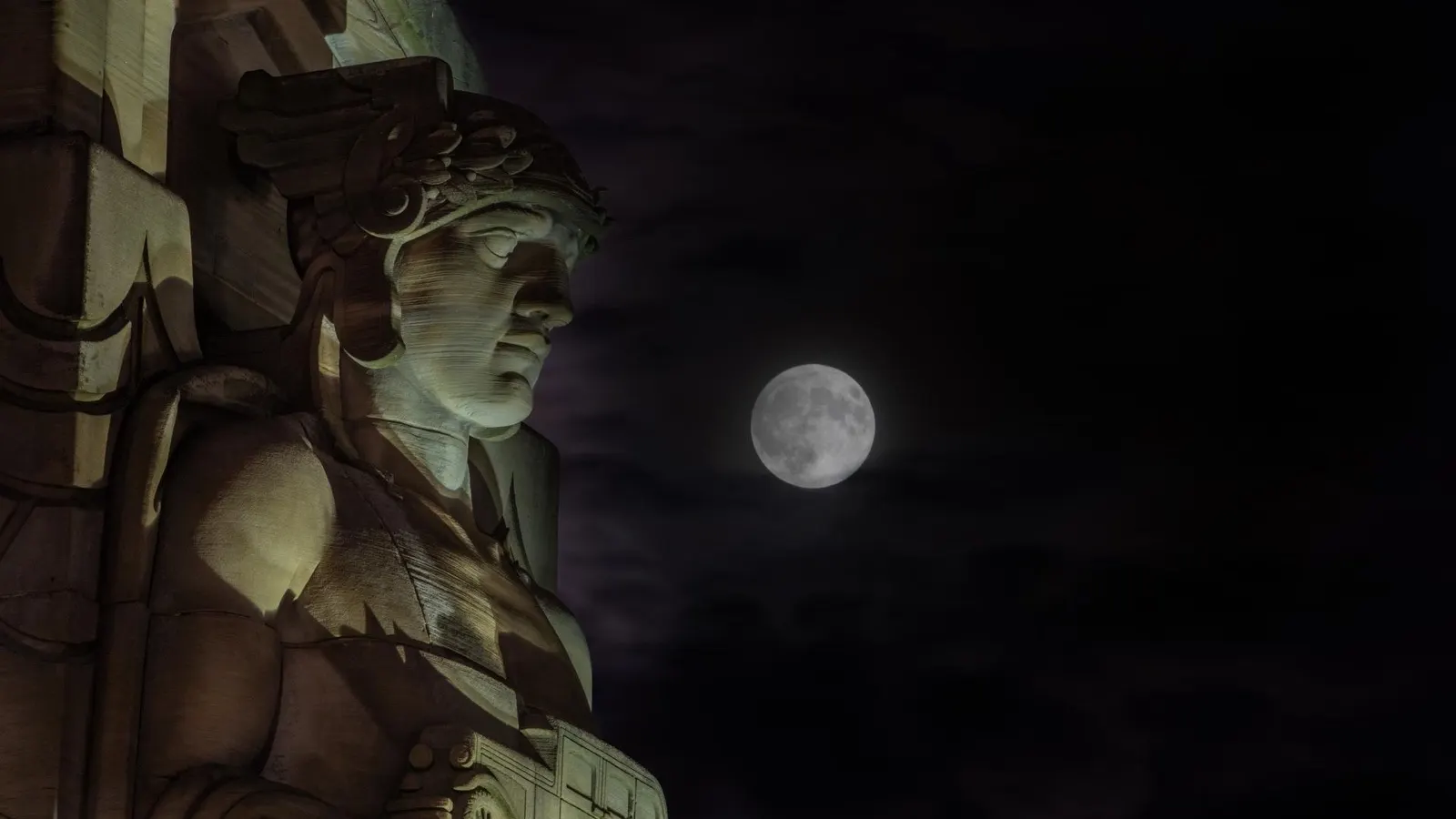
November’s Beaver supermoon rises over the United States on Tuesday, Nov. 24, with a viewing window around dusk. In New York, for example, the Moon is due above the northeastern horizon about 16 minutes before sunset. In Los Angeles, Griffith Observatory puts moonrise at 4:43 p.m. local time. A clear horizon will matter more than arriving at the exact minute.
The Moon reached its full phase at 9:53 a.m. Eastern, according to the U.S. Naval Observatory’s 2026 phase table. That was 8:53 a.m. Central, 7:53 a.m. Mountain and 6:53 a.m. Pacific. Those times describe a single moment. Moonrise is a separate event and depends on where you stand. The Moon will still look full when it rises Tuesday evening, weather permitting.
When the Moon rises on Nov. 24
In Boston, the local prediction is 3:56 p.m. EST, 19 minutes before the 4:15 p.m. sunset, with moonrise toward the northeast. In New York City, the calculation puts moonrise at 4:15 p.m. EST and sunset at 4:31 p.m. That short overlap offers a chance to see the Moon while the sky still has some daylight.
At Griffith Observatory in Los Angeles, moonrise is 4:43 p.m. PST with a bearing of about 58 degrees clockwise from north, also toward the northeast. Hills and buildings can keep the Moon out of view until it climbs above the local skyline. Griffith’s table gives an example of how much the timing moves from night to night. The next evening’s moonrise at the observatory is 5:45 p.m., or 62 minutes later.
Readers elsewhere can enter their dates and coordinates in the Naval Observatory’s local Sun and Moon calculator. Compare the moonrise and sunset lines for your location. A city time is a reference for an open horizon. A building across the street, a ridge or a bank of clouds may delay your first view.
Why the exact full phase happens in daylight for some viewers
“Full” refers to the Moon’s position relative to Earth and the Sun. That moment is the same everywhere on Earth. Local time zones change the clock reading, and each location’s view depends on whether the Moon is above its horizon then.
NASA’s supermoon guide says the term is commonly used for a full Moon near the closest part of its orbit around Earth, known as perigee. It describes a difference in distance and apparent size. A low Moon can also look larger beside a skyline or trees because of the Moon illusion. The horizon effect can make an ordinary full Moon look large too. The distance effect applies regardless of where the Moon sits in the sky.
You can see the Moon without a telescope. To use the skyline for a photograph, choose a clear view toward the predicted moonrise direction and arrive early enough to adjust your position. If clouds block the horizon, check again later as the Moon climbs or look the following evening. A full Moon’s appearance changes gradually over a night.
Save the December date in your own time zone
NASA’s calendar lists the next supermoon on Dec. 24 at 01:28 UTC. Converted to mainland U.S. clocks, that is Dec. 23 at 8:28 p.m. Eastern and 5:28 p.m. Pacific. A calendar showing Dec. 24 in Universal Time and a U.S. viewing guide showing Dec. 23 can therefore refer to the same full phase. Use your local date and moonrise prediction when making plans.
Trust & transparency
How we handled this story
Verified the lunar phase with USNO, the NASA supermoon dates, Boston and New York rise-versus-sunset times from timeanddate, and two consecutive Los Angeles moonrise times from Griffith Observatory.

Grounded in this reporting
Ask Newsmerica
Ask about this article. Answers quote the closest published passages and link back to their sources.
This tool retrieves article passages; it does not add outside facts.Keep exploring